
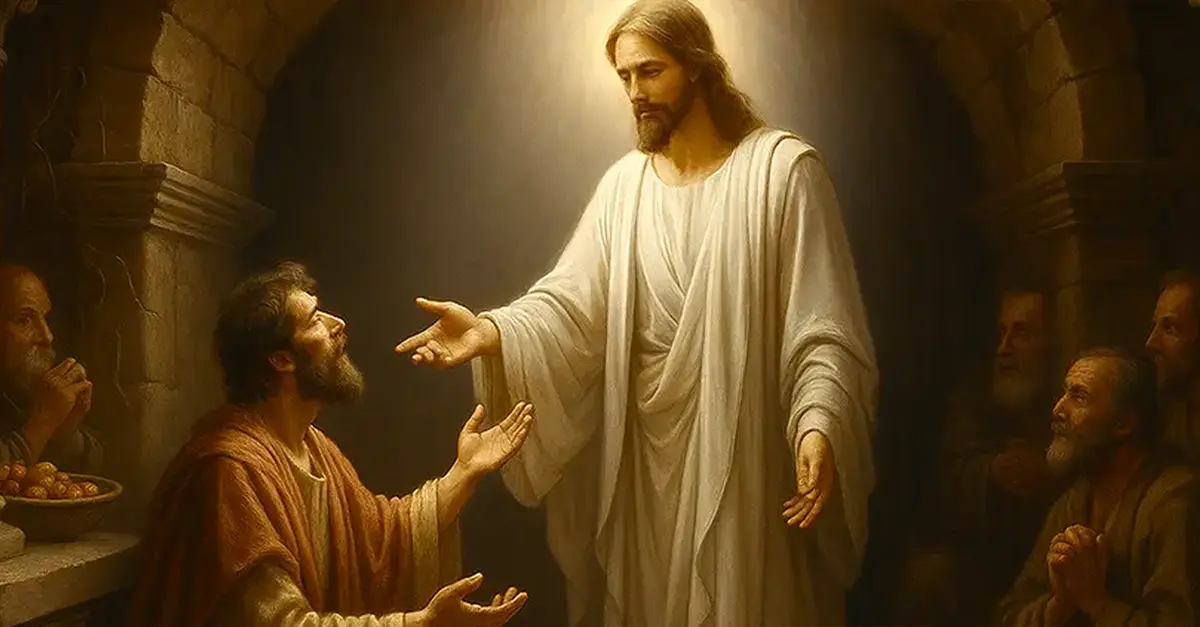
The concept of the “Throne of St. Thomas” is rooted in the words of our Lord Himself. In St. Matthew 19:28, Jesus tells the apostles: “Amen, I say to you, in the renewal of all things, when the Son of Man sits on the throne of His glory, you who have followed Me will also sit on twelve thrones, judging the twelve tribes of Israel.” Likewise, in Luke 22:28–30, Jesus says: “You are those who have stayed with Me in My trials… that you may eat and drink at My table in My Kingdom and sit on thrones judging the twelve tribes of Israel.”
These passages clearly show that Christ promised twelve thrones to the twelve apostles, granting each one authority in His Kingdom. Even Judas was promised a throne, though he lost his place and another took his position. Therefore, if all twelve apostles were given this authority, there is no doubt that St. Thomas the Apostle also received a throne.
The word “throne” comes from the Greek thronos, the Syriac kursyo, and the Hebrew kisse, all meaning “a seat of authority” belonging to a king, prince, or judge. Throughout Scripture, the throne symbolizes divine authority (cf. 1 Kings 22:19; Isaiah 6:1; Rev. 4:2). In Revelation 4:4, twenty-four thrones surround God’s throne, traditionally understood as representing the twelve patriarchs of the Old Testament and the twelve apostles of the New Testament. Thus, a throne signifies authority that comes from God and is entrusted to His chosen servants.
A throne represents authority that originates solely from God. Jesus Christ shares His authority - His throne, with others, including the apostles. Scripture gives no indication that any apostle received exclusive authority over the others. In the Church’s tradition, the “apostolic thrones” are shared by all bishops, who together inherit the authority of the entire college of apostles.
Over time, the word “throne” was replaced by the Greek kathedra, used in Matthew 23:2 for the “seat of Moses,” the symbol of teaching authority. From kathedra comes the word Cathedral, meaning the church that contains the bishop’s chair—the sign of his pastoral authority. A bishop does not hold authority independently; he exercises the authority of the Church, for the Church.
(This summary is based on the article prepared by H.G. Dr. Zachariah Mar Aprem, drawing from a paper submitted by the late Metropolitan Dr. Paulose Mar Gregorios to the Holy Episcopal Synod in 1974.)